Where Kenya, Somalia and Ethiopia meet, clan conflicts over water and pasture have cost lives for generations. Community-led peace dialogues are rewriting that story.
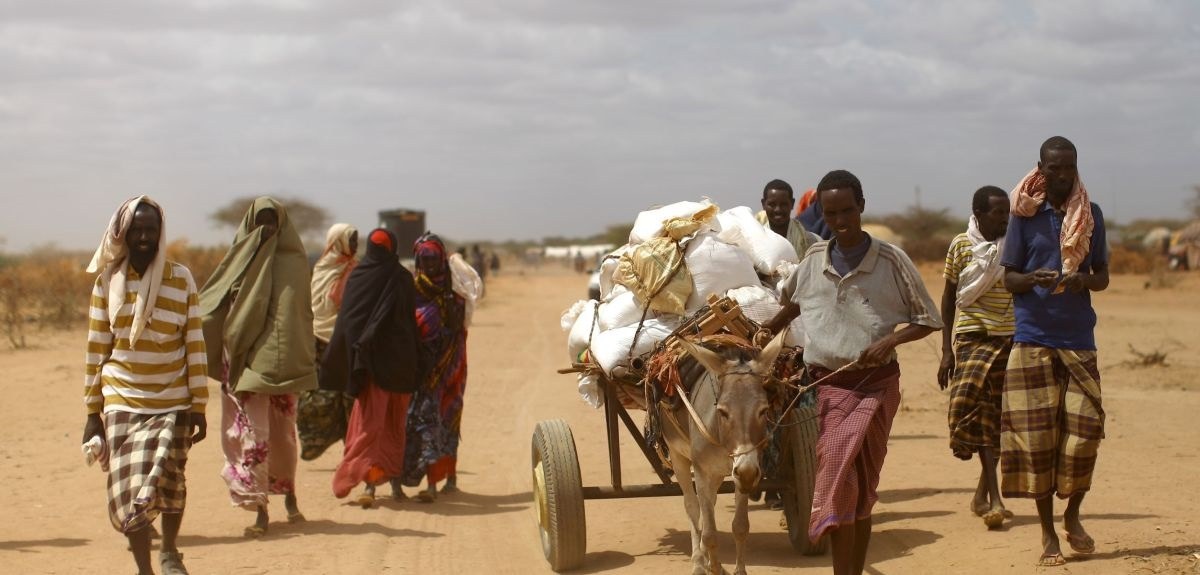
The Mandera Triangle — the meeting point of Kenya, Somalia and Ethiopia — is home to millions of pastoralists who move with their herds in search of water and pasture. Borders drawn on maps mean little to families whose grazing routes have crossed them for centuries. But when resources shrink, competition grows, and long-standing clan tensions can quickly turn violent.
At Voice of Peace for All in the Horn of Africa (VOPA), we have learned that lasting peace in this region cannot be imposed from outside. It has to be built, conversation by conversation, by the communities themselves. That is the heart of our cross-border peace dialogues.
Why conflict persists in the borderlands
Conflict in the Mandera Triangle rarely has a single cause. Our experience points to a web of connected drivers:
- Competition over scarce resources — water points and grazing land shrink with every failed rainy season.
- Proliferation of small arms — weapons move easily across porous borders.
- Smuggling, trafficking and business rivalry — economic disputes can take on a clan dimension.
- Weak links between communities and authorities — when people do not trust institutions to resolve disputes, they resolve them on their own.
Left unchecked, these tensions escalate into fully fledged fighting that destroys property, costs lives and displaces families. Conflict is, in fact, the root cause of food insecurity in Mandera County: it stops families from herding, farming and trading.
What a peace dialogue actually looks like
A peace dialogue is not a single meeting. It is a process that typically moves through several stages:
- Rapid response and ceasefire. When violence breaks out, the first priority is to stop the bleeding. Trusted elders and religious leaders shuttle between the parties to secure a ceasefire.
- Listening sessions. Each community is heard separately — elders, women, youth and business people — so that grievances are understood before the parties meet.
- Joint dialogue. Representatives come together in a neutral venue to agree on the facts, acknowledge losses and negotiate terms such as compensation (often through traditional diya), shared use of water points and grazing areas.
- Agreement and follow-up. Commitments are written down, witnessed by local authorities and monitored by joint peace committees.
Lessons from Gedo
In the Gedo region of Somalia, VOPA facilitated dialogues between the Garre and Marehan communities, as well as within the Marehan clan, in Elwak and Boruhache. Working closely with local authorities, the process produced a series of ceasefires and signed peace agreements. This work was supported through Peace II, BORDER I & II and the SHIIR Program under PACT.
Three lessons stand out:
- Inclusion is non-negotiable. Agreements that leave out women and young men tend to collapse. Youth are often the ones carrying weapons; women often carry the community's memory of loss and the strongest desire for peace.
- Peace needs a dividend. When agreements reopen markets and grazing routes, people feel the benefit quickly — and defend the peace.
- Follow-up matters as much as signing. Joint committees that meet regularly catch small disputes before they become big ones.
Linking communities with local authorities
A recurring theme in our work is strengthening linkages between communities and local authorities. When chiefs, district commissioners, police and clan elders know and trust each other, early warning signals travel faster and responses are better coordinated. We bring these actors together in joint forums and support community peace committees to report tensions early.
Peace as the foundation for everything else
Peace building is not a separate sector from development — it is the foundation for it. Children cannot go to school during clan fighting. Women cannot run businesses when markets are closed. Rangelands cannot be managed sustainably when communities cannot agree on who grazes where. That is why VOPA links its peace work with women and youth empowerment and climate adaptation.
How you can support peace in the Horn of Africa
Every dialogue requires transport for elders across long distances, neutral venues, facilitation, and follow-up visits to make agreements stick. If you believe that communities themselves hold the key to peace, consider partnering with VOPA. Together, we can make the Mandera Triangle a place where borders connect people rather than divide them.

VOPA builds peace, resilience and dignity with communities in Kenya, Somalia and Ethiopia. About us